
I write funny math questions with no numbers, no calculations, and no correct answer. I call them Fountains. Here is why.
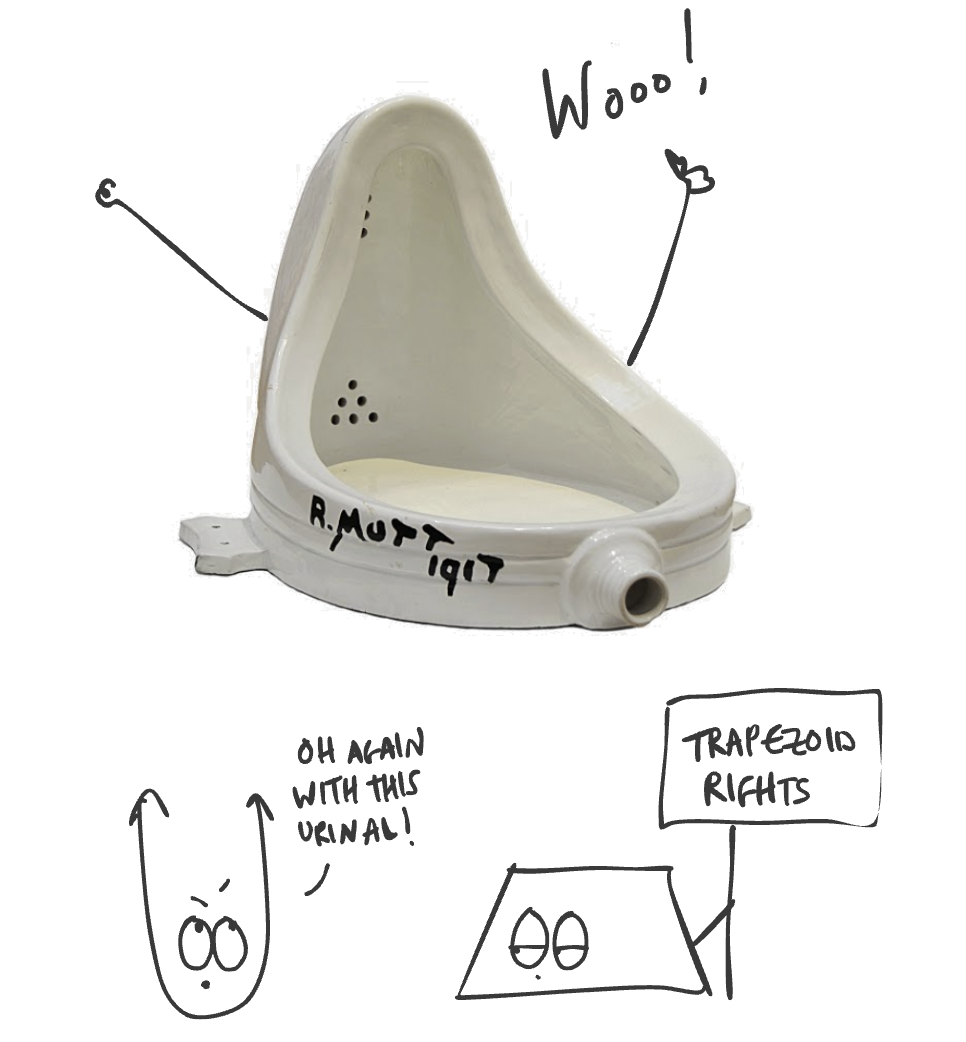
In 1917, Marcel Duchamp walked into a hardware store. He walked out with a urinal. Duchamp flipped the urinal upside down and named it Fountain. Art was never the same.
Math is full of urinals. By which I mean full of things that are extremely unpleasant:
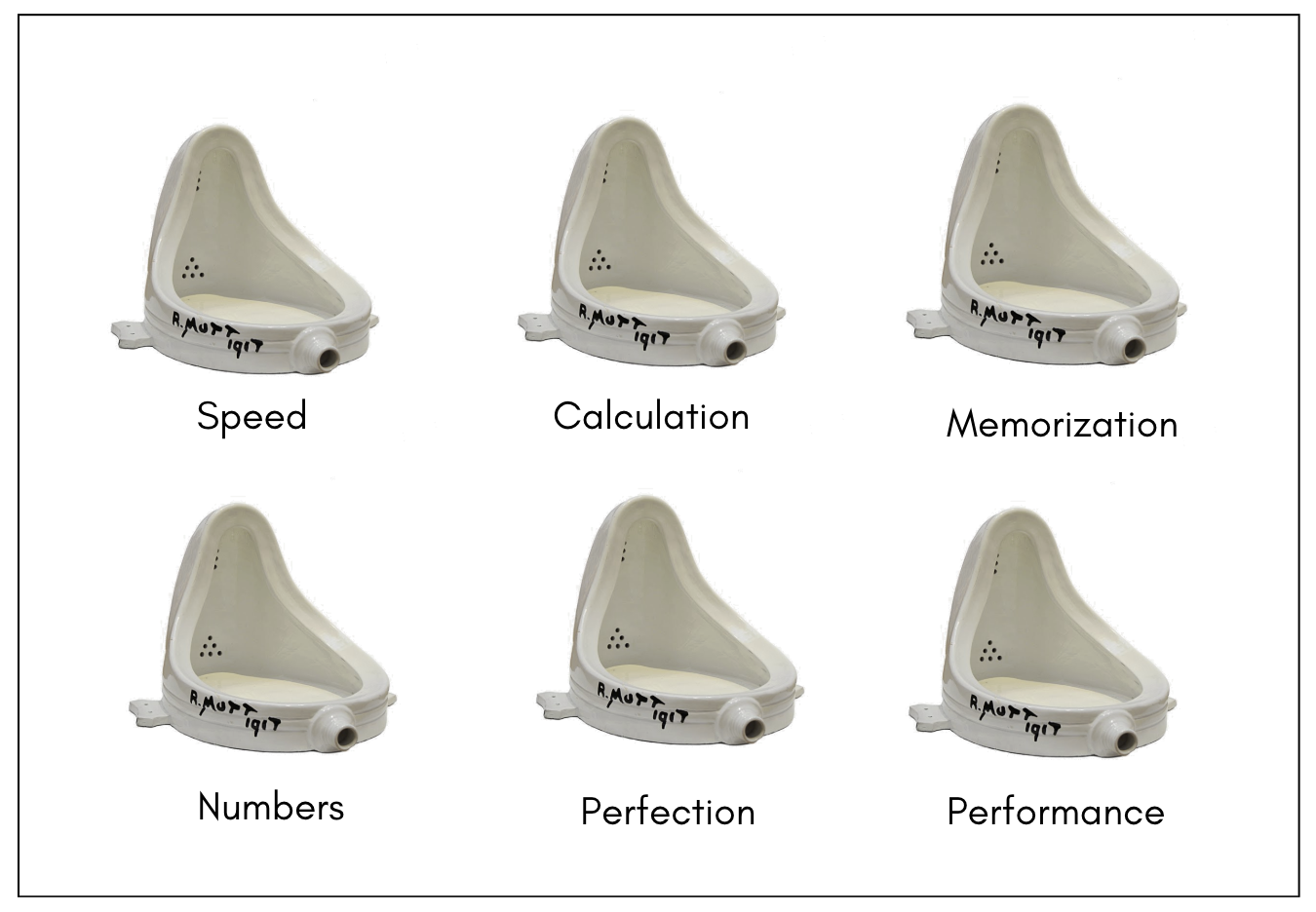
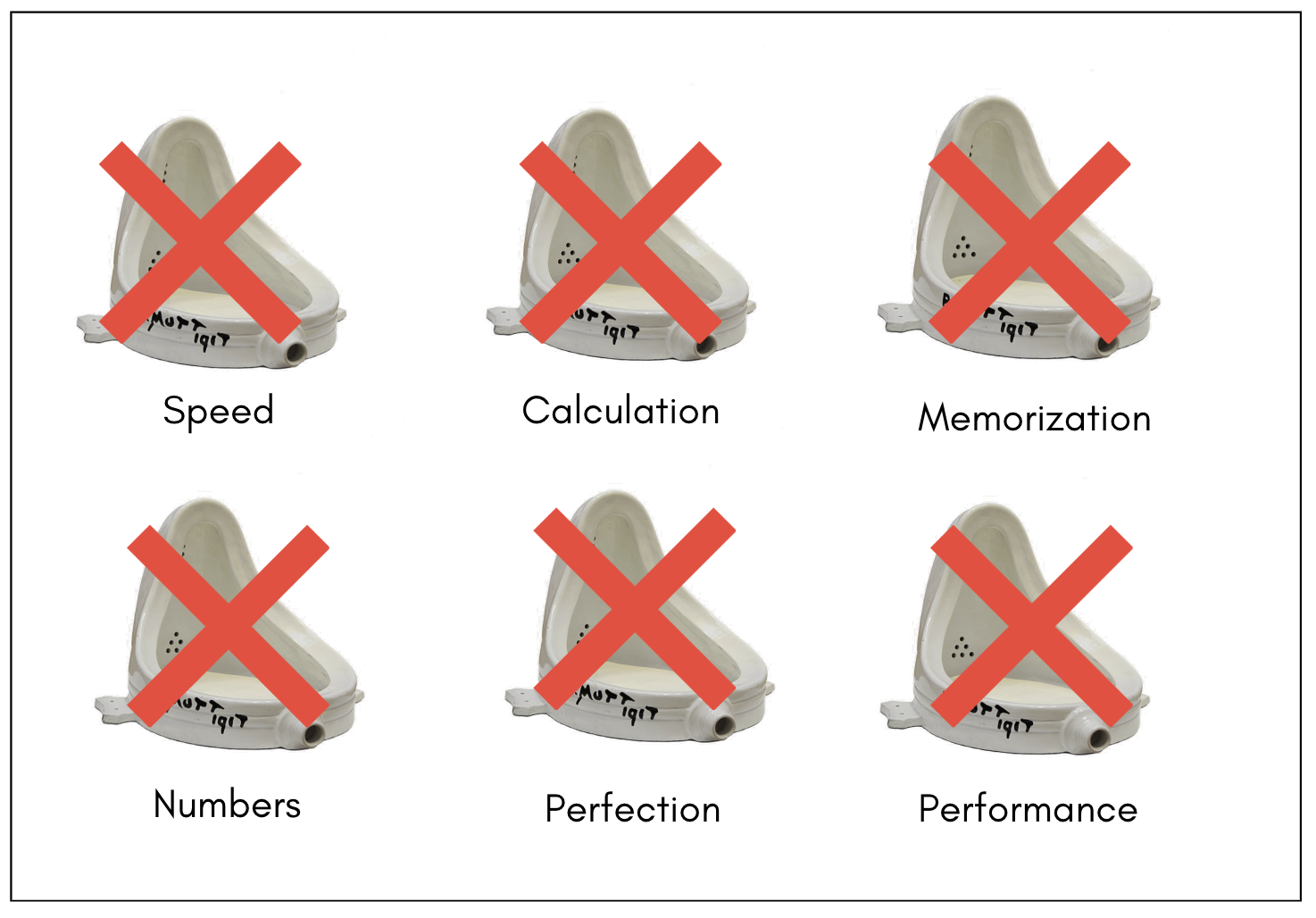
If we treat math the way Duchamp treated a urinal we can make math funny and accessible to everyone.

Take trigonometry. Most people encounter it in algebra 2. But what if we removed math’s urinals and asked a fountain question instead:
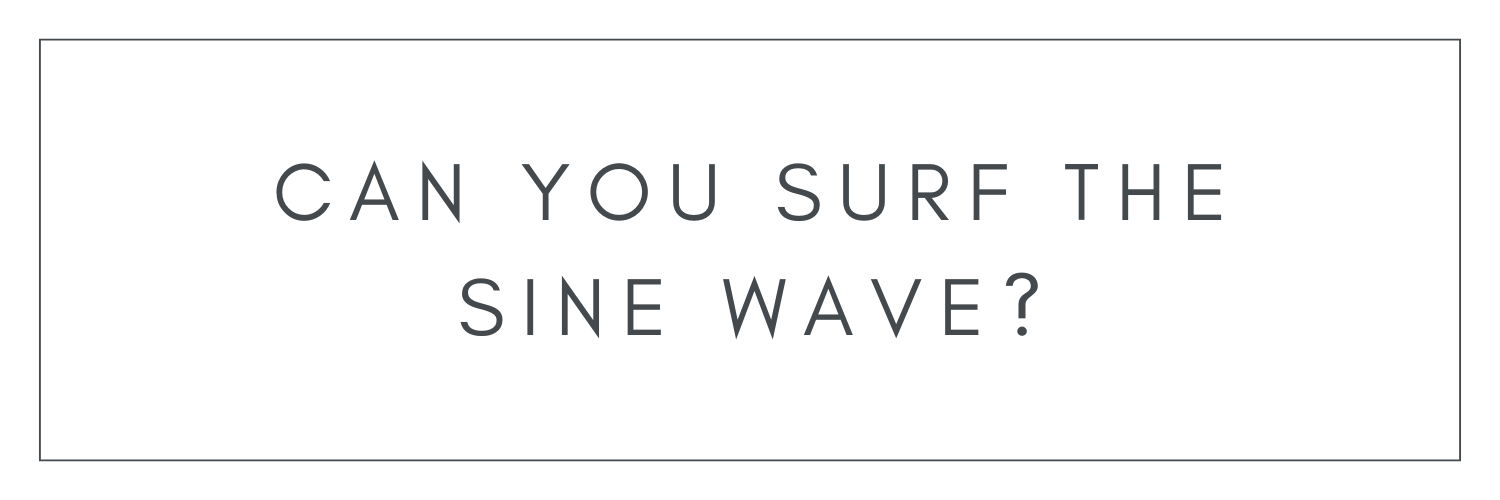
Anyone can think about this — as long as they sort of know what a sine wave looks like.
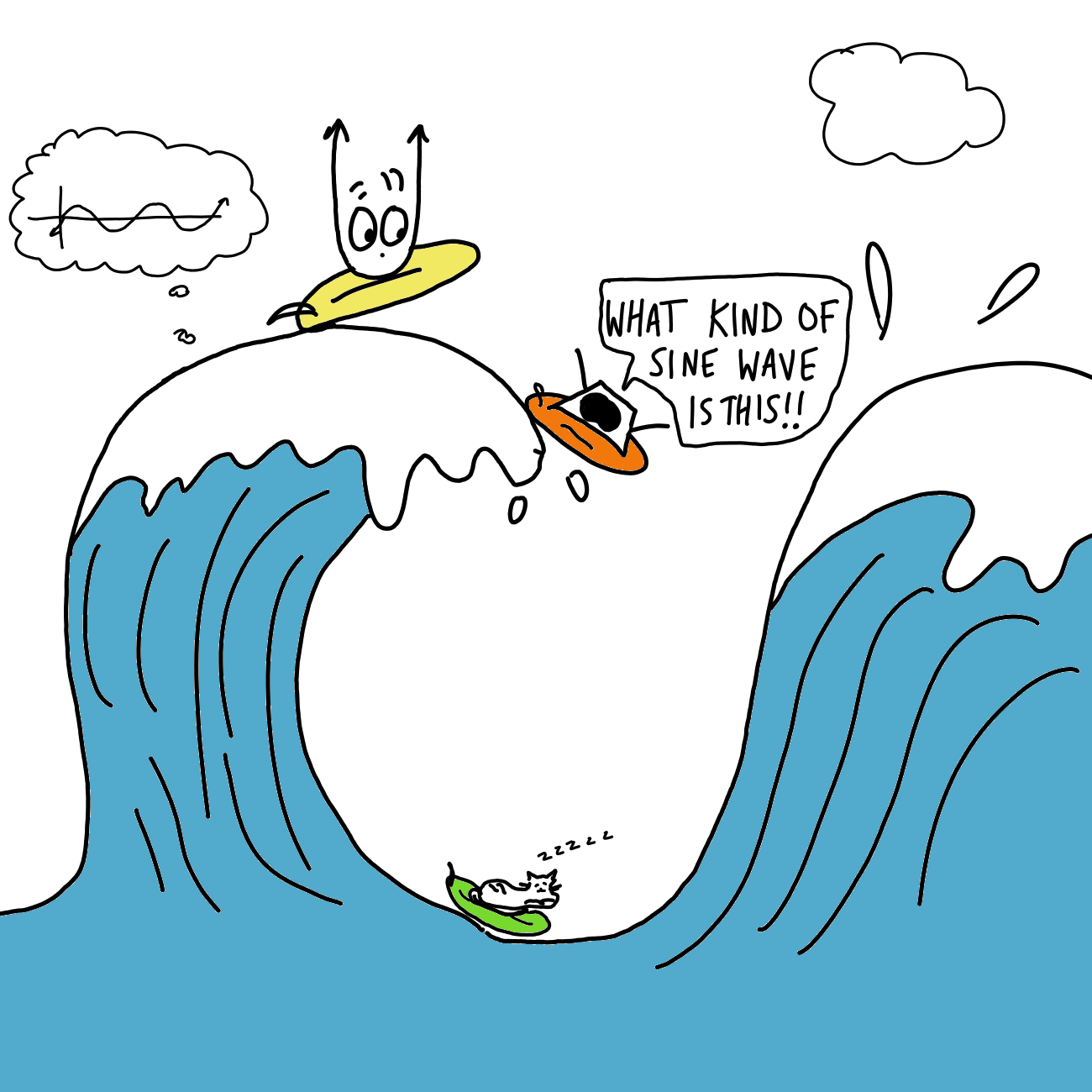
Will it look like the waves at Nazaré? Can the wave be flat? Almost flat? Do I have to surf this wave forever? These are surprisingly deep questions…
…that a kindergartner can ask.
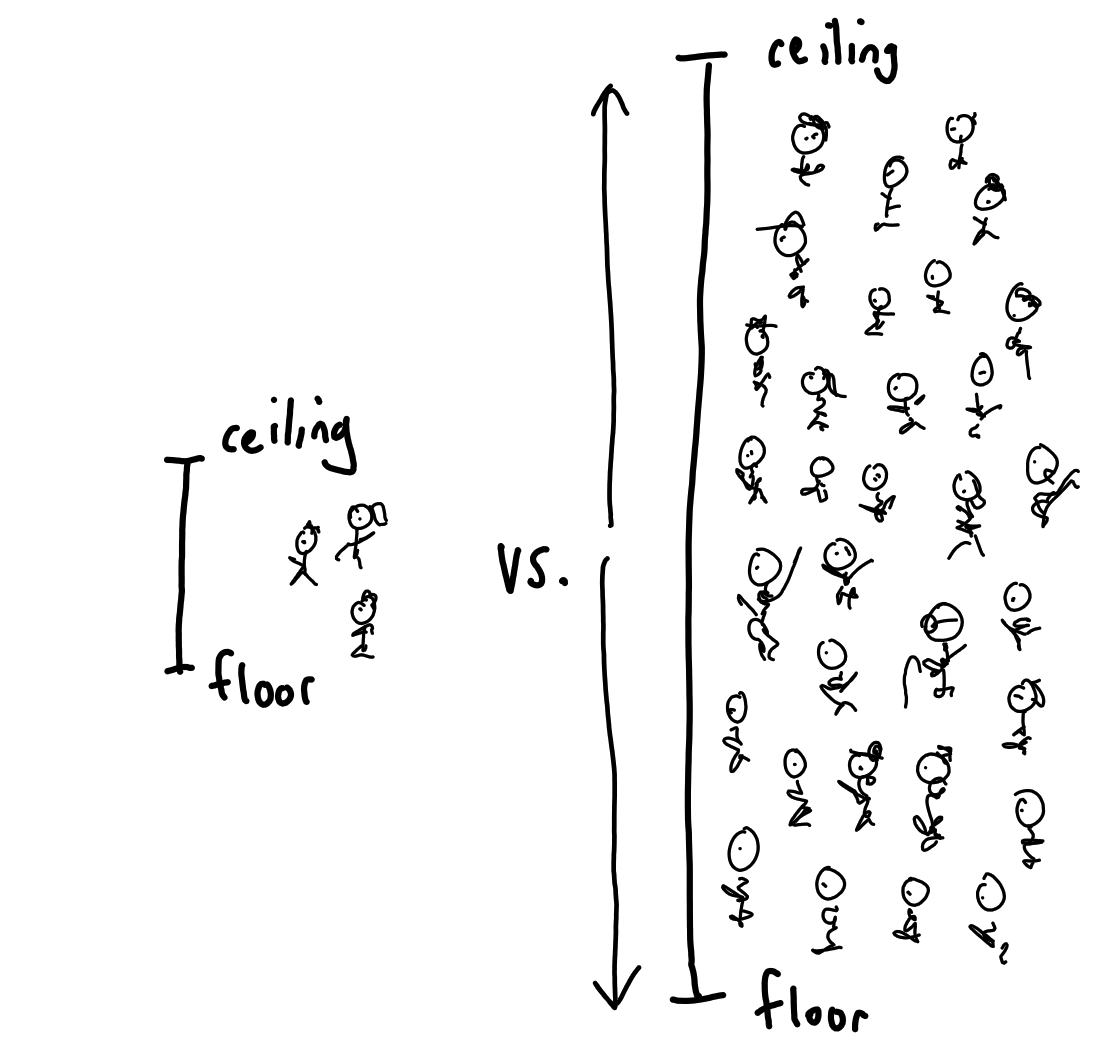
Figure 1: “Find the amplitude of y = 2 sin(5(x − 0.5)) + 1” (a typical trig question) vs “Can you surf the sine wave?” (right).
The question on the right invites “keep thinking questions” (Liljedahl 2020) from anyone. Because the gap between its floor and its ceiling is so large (Boaler 2016), many more people can participate.
Liljedahl, Peter. Building Thinking Classrooms in Mathematics, Grades K-12: 14 Teaching Practices for Enhanced Learning. Corwin (2020)
Boaler, Jo. Mathematical Mindsets. Jossey-Bass. (2016).